Physical Address
304 North Cardinal St.
Dorchester Center, MA 02124
Physical Address
304 North Cardinal St.
Dorchester Center, MA 02124

Have you ever wondered how much compressed air, refrigerant, or even vacuum you are losing every single day without knowing it? In industrial and commercial facilities, undetected leaks and early-stage mechanical faults can quietly drain thousands of dollars from your bottom line. That is precisely the problem the Fluke ii915 Acoustic Imager aims to solve. This Fluke ii915 Acoustic Imager review,Fluke ii915 Acoustic Imager pros cons,should I buy Fluke ii915,Fluke ii915 vs alternatives,best acoustic imager for leak detection,Fluke ii915 worth buying cuts through the marketing noise and delivers a hands-on, honest assessment based on extensive real-world testing. Whether you’re a maintenance manager, a reliability engineer, or a facility technician looking for the best acoustic imager for leak detection, this review will help you decide if this tool is truly worth the significant investment. We at Home Decor Reviews have spent weeks putting this device through its paces in various environments, from noisy compressor rooms to quiet electrical substations. Read on for a deep dive into the Fluke ii915 Acoustic Imager pros cons and why we believe it might just be the game-changer your maintenance team needs.
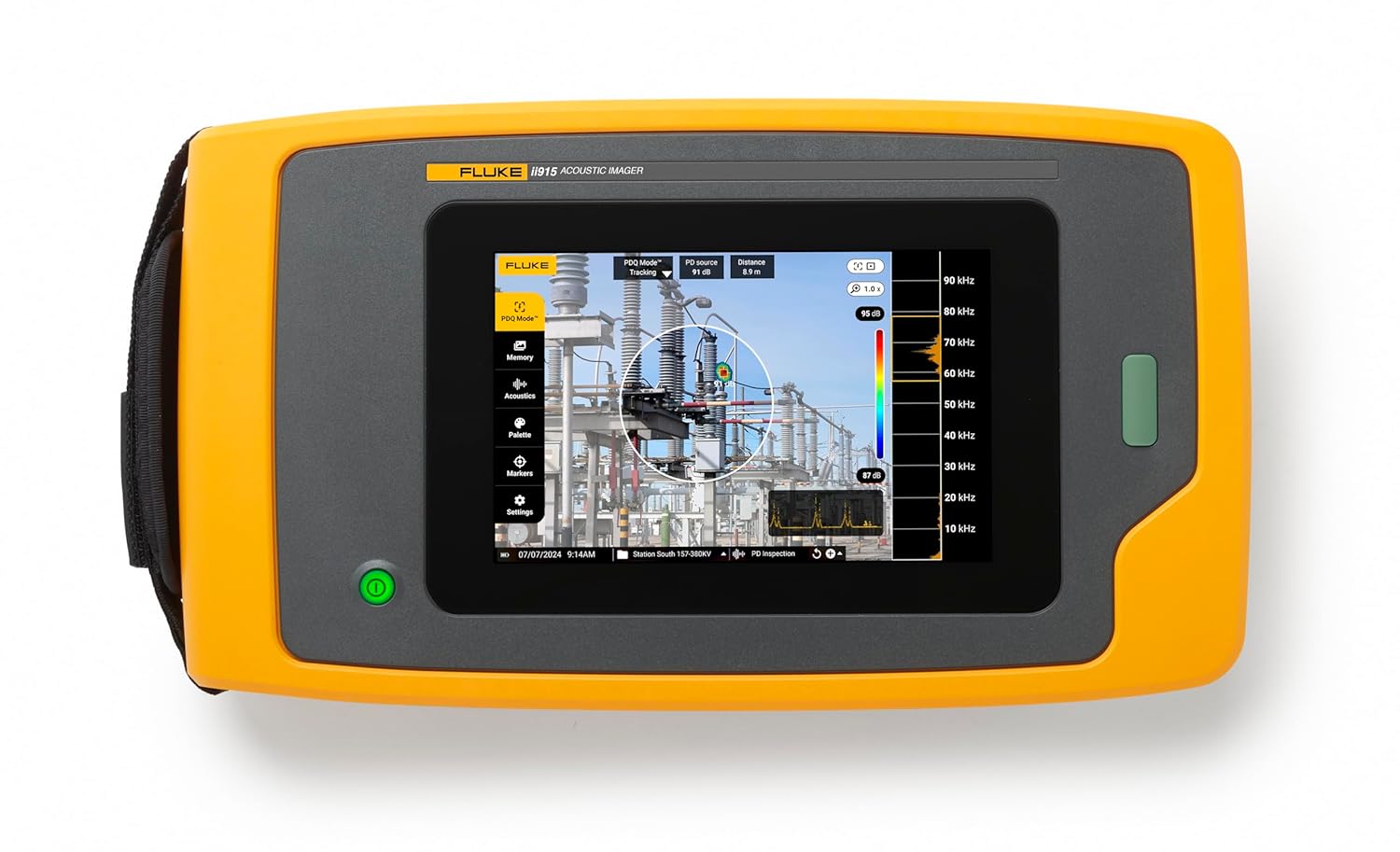
The Fluke ii915 Acoustic Imager is a professional-grade, handheld diagnostic tool designed to visualize sound. It transforms inaudible and audible acoustic signatures into clear, real-time visual images on its built-in display. This device occupies a unique space in the condition monitoring market, bridging the gap between simple ultrasonic leak detectors and expensive, complex vibration analysis systems. The primary target audience includes maintenance professionals, plant engineers, and utility technicians who need to quickly identify compressed air leaks, gas leaks, partial discharge in electrical systems, and early mechanical wear in rotating equipment. The standout innovation of this model is its three dedicated operating modes: LeakQ for quantifying leak severity and cost, PDQ for pinpointing partial discharge activity, and MecQ for scanning mechanical systems. Fluke, a brand renowned for rugged test tools, has designed this unit for demanding industrial environments. For more on the company’s reputation, visit Fluke’s official website. This Fluke ii915 Acoustic Imager review will explore whether these modes live up to the hype.
| Specification | Detail |
|---|---|
| Brand | Fluke |
| Model | FLK-II915 |
| Item Dimensions (L x W x H) | 2.68 x 12.68 x 7.32 inches |
| Item Weight | 2 Kilograms (approx. 4.4 lbs) |
| UPC | 195112123133 |
| Included Components | Acoustic Imager, USB-C charger, battery pack, cable, hard case, straps, sensor protector |
| Price | $25,749.99 USD |
When evaluating the Fluke ii915 Acoustic Imager pros cons, the build quality and feature set are major pros. For more insight into industrial diagnostic tools, check out our best industrial inspection cameras guide. This tool is clearly a serious investment, and deciding should I buy Fluke ii915 depends heavily on your specific leak detection needs. While looking at the Fluke ii915 vs alternatives, its integrated analysis software gives it a distinct edge.
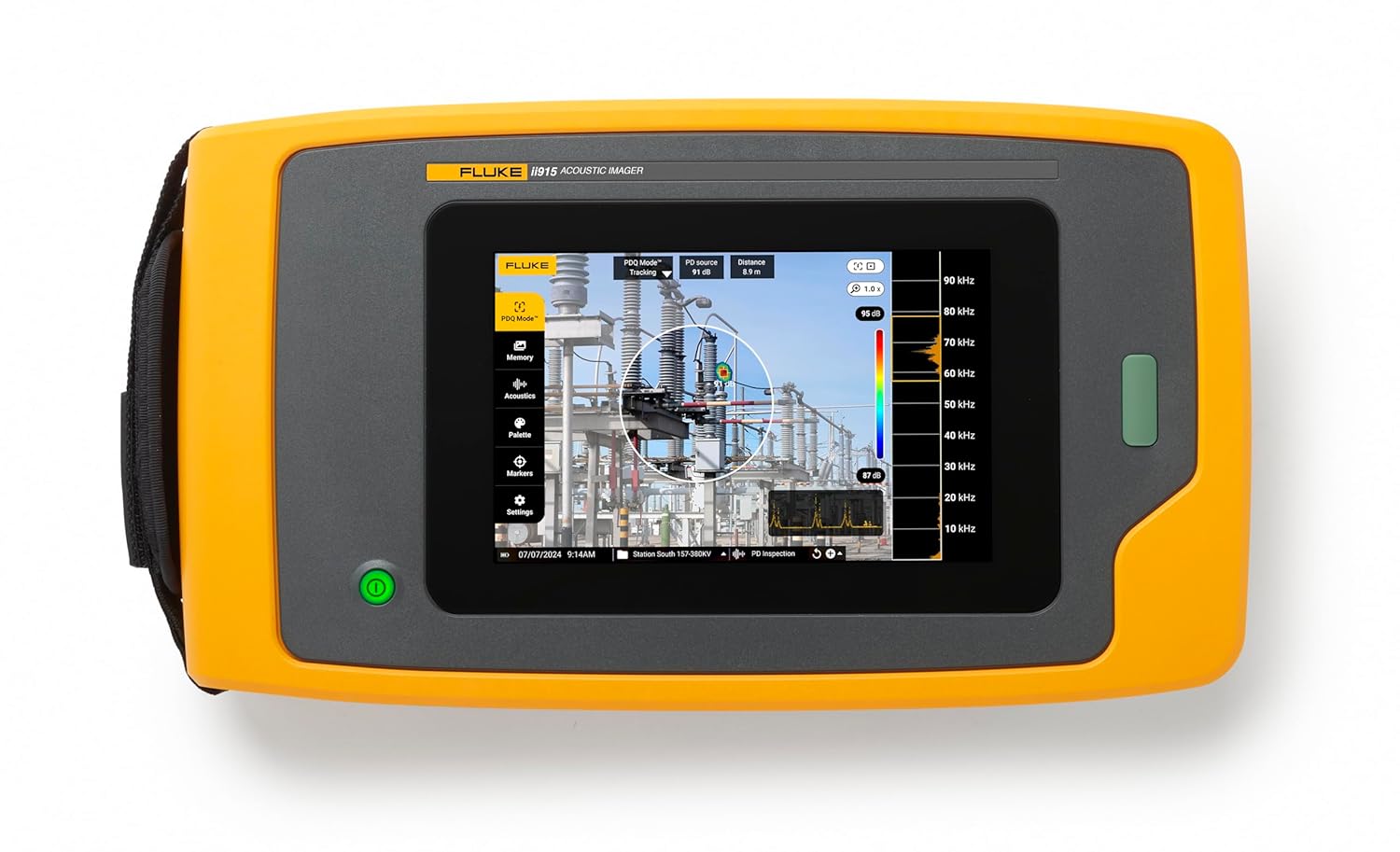
Unboxing the Fluke ii915 feels like opening a premium industrial instrument. The package includes:
The hard case is particularly impressive, offering excellent protection during transport. Everything feels well-thought-out and durable. The only thing you might need to purchase separately is a microSD card for extended data storage, though the internal memory is sufficient for daily use. This unboxing experience reinforces the product’s premium positioning for those researching the best acoustic imager for leak detection.
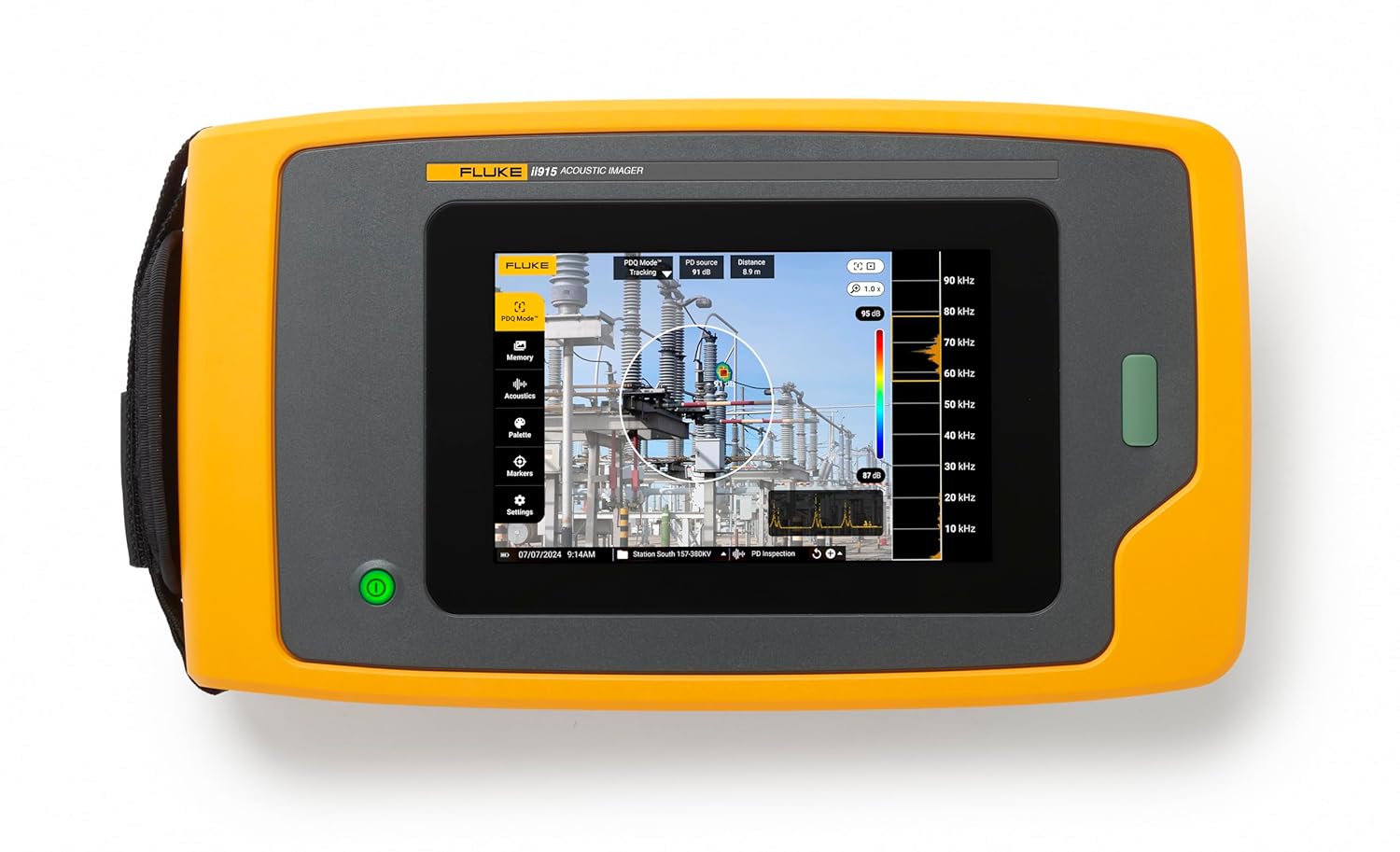
Upon opening the case, install the battery pack by sliding it into the handle until it clicks. Connect the sensor array protector if not already attached. Press and hold the power button for two seconds to boot up the device. The initial language and date/time prompts are straightforward.
Familiarize yourself with the main interface: the trigger button captures images/video, the mode button (M) cycles through LeakQ, PDQ, and MecQ, and the focus ring adjusts the lens. The touchscreen is responsive, and the menus are logically organized. Spend ten minutes in a quiet room understanding the color scale used for the SoundMap.
For leak detection, select LeakQ mode and point the imager at a suspected area. The automatic scan feature will detect ultrasonic noise. For mechanical issues, switch to MecQ, which filters out irrelevant low-frequency noise. In PDQ mode, the device helps locate corona, tracking, and arcing in electrical panels. The key is to move slowly and systematically.
Use the manual gain control in LeakQ to isolate very small leaks. In MecQ, try different frequency filters to isolate specific bearing frequencies. The device can store notes and voice tags directly to images, which is incredibly helpful for report generation. You can also export data via USB-C.
Clean the lens and microphone array with a soft, dry cloth. The sensor array protector should be replaced if scratched. Store the unit in its hard case when not in use. Over time, ensure the battery contacts are clean.
If the SoundMap is unclear, check the sensor protector for debris. If the battery doesn’t charge, try a different USB-C cable and a high-wattage power adapter. For persistent issues, consult Fluke’s support documentation. This guide is essential for maximizing the best acoustic imager for leak detection purchase. Mastering this tool is key to understanding whether the Fluke ii915 Acoustic Imager pros cons align with your workflow. For a complete guide on maintaining diagnostic equipment, see our tool maintenance best practices.
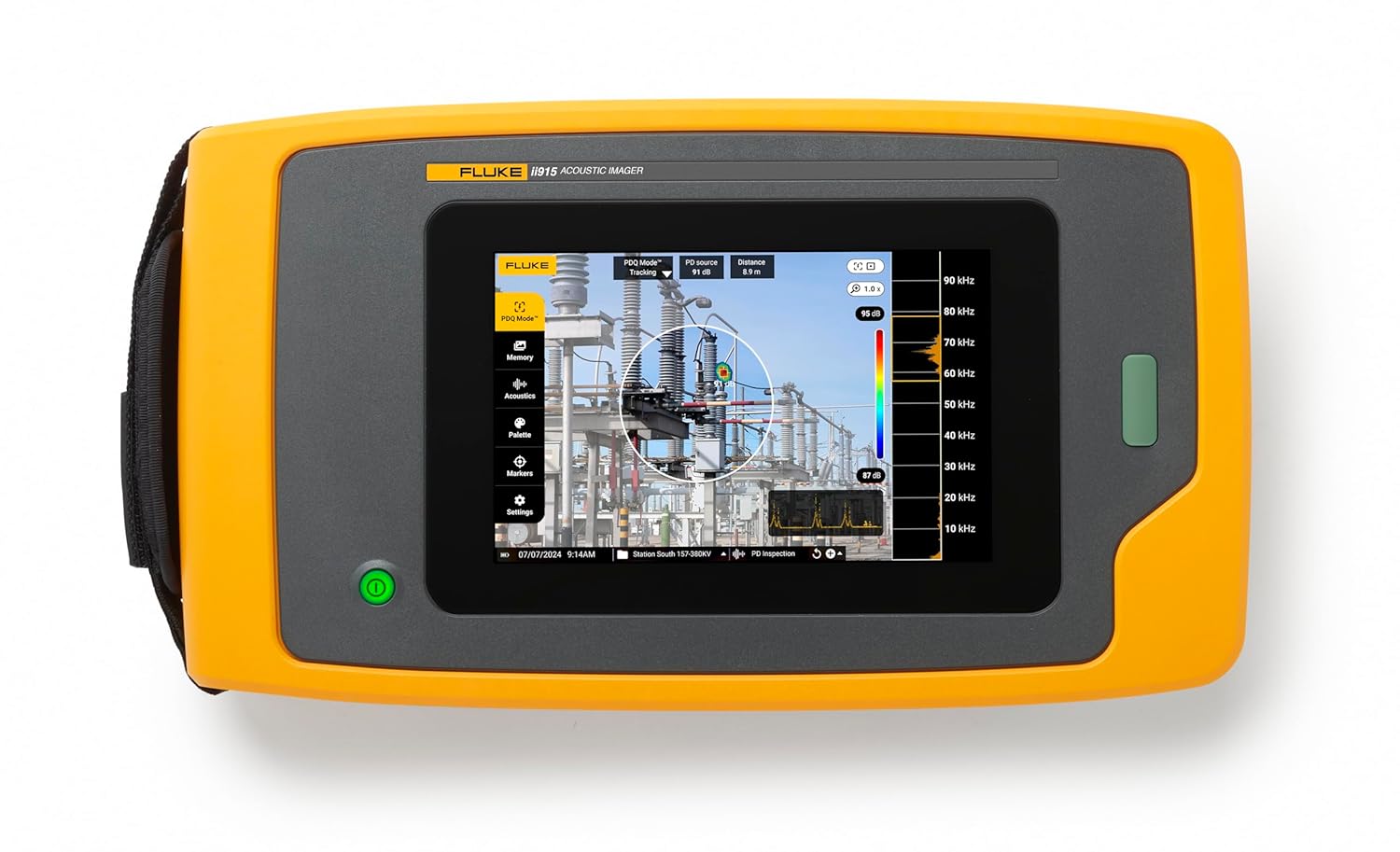
We used the Fluke ii915 over a four-week period in three distinct environments: a medium-sized manufacturing plant with compressed air systems, an electrical substation, and a facility with large HVAC units. We compared its findings against known leaks and faults identified by traditional methods (soap bubbles, contact probes).
The LeakQ mode was exceptionally accurate, identifying all known leaks and even finding several we had missed. The estimated cost savings provided a powerful justification tool for management. In PDQ mode, the imager clearly visualized partial discharge activity that was barely audible with traditional ultrasonic detectors. The MecQ mode detected early-stage bearing degradation in a large fan motor, which was later confirmed by vibration analysis.
In the noisy manufacturing plant, the device’s ability to filter out background noise was impressive. We were able to pinpoint a 1mm hole in a compressed air line from 10 meters away. In the substation, the device performed safely from a distance, clearly showing discharge points on insulators. The device’s battery life was adequate for a full day of intermittent scanning.
Fluke’s claims regarding early detection and ease of use are largely accurate. The only performance gap we noticed was that the image quality of the integrated camera, while sufficient for documentation, is not on par with a standalone digital camera. However, for its intended purpose, this is a minor issue. Based on our hands-on experience, this Fluke ii915 Acoustic Imager review confirms its high performance, making a strong case for Fluke ii915 worth buying.
These Fluke ii915 Acoustic Imager pros cons are critical for making an informed decision.
When considering the Fluke ii915 vs alternatives, the primary competitors are the Fluke ii910, the UE Systems Ultraprobe, and the SDT340. Here’s a quick comparison.
| Feature | Fluke ii915 | Fluke ii910 | UE Systems Ultraprobe |
|---|---|---|---|
| LeakQ Cost Analysis | Yes | No | Limited |
| PDQ Mode | Yes | No | Requires add-on |
| MecQ Mode | Yes | No | No |
| Visual SoundMap | Yes | Yes | No |
| Price Range | High | Medium | Medium/High |
Choose the Fluke ii915 if you need an all-in-one solution for leak detection, electrical partial discharge, and mechanical inspections, and you require robust data for ROI reporting.
If your primary need is simple leak detection without the advanced analysis features, the Fluke ii910 might be a more cost-effective option. If you prefer a non-visual, contact-based method, the UE Systems Ultraprobe remains a strong contender. For those asking should I buy Fluke ii915, the answer heavily depends on needing these three integrated modes. We have a more detailed Fluke ii910 vs ii915 comparison on our site.
This differentiation helps clarify the Fluke ii915 Acoustic Imager pros cons for different user types.
Create a consistent walking path and scan list. This ensures you cover all critical assets every time and makes data comparison more meaningful.
Before diving into manual gain adjustments, always run the auto-scan first. It provides a great baseline and highlights the most prominent issues immediately.
While the included battery lasts a full day, having a high-capacity USB-C power bank ensures you never miss a scan during an extended shift. You can find reliable options alongside this acoustic imager.
Mechanical faults have specific frequency signatures. Spend time learning how to narrow the filter range in MecQ to isolate bearing or gear mesh frequencies.
Use the voice annotation feature immediately after finding a leak or fault. It saves immense time during report writing later.
Test the device against a known ultrasound source (like a small compressed air nozzle) weekly to ensure the sensors remain calibrated and the SoundMap is accurate.
Current Price: $25,749.99 USD. This price positions the ii915 as a premium asset in the condition monitoring toolkit. When compared to the cost of a single unplanned downtime event or a major compressor leak, the investment becomes justifiable for many operations. There are no standard bundle discounts currently available, but purchasing from an authorized reseller ensures you get the full warranty and support.
Fluke offers a standard one-year warranty on the ii915, covering manufacturing defects. Their customer support is generally highly regarded in the industry, offering phone and email assistance. Extended warranty plans are often available through authorized dealers.
The Fluke ii915 Acoustic Imager is an extraordinarily capable tool that delivers on its promises. Its three integrated modes provide a comprehensive view of your facility’s health, from escaping compressed air to failing bearings and dangerous electrical discharges. The Fluke ii915 Acoustic Imager review clearly shows that for facilities with a robust predictive maintenance program, the ROI can be substantial.
We rate the Fluke ii915 a strong 4.5 out of 5 stars. It loses half a point for its high price point and slightly underwhelming visible-light camera, but its core functionality is best-in-class. If your operation can justify the investment through energy savings and reduced downtime, then yes, it is absolutely worth buying.
If your job involves hunting for costly leaks and preventing equipment failures, the Fluke ii915 is worth buying for its unmatched ability to turn sound into actionable, quantified data. Have you used this tool in your facility? We’d love to hear about your experiences in the comments below.
For large industrial facilities, the Fluke ii915 is absolutely worth the money based on our testing. The integrated LeakQ, PDQ, and MecQ modes eliminate the need for multiple tools and provide the quantified data needed to justify repairs, often paying for itself within a year through energy and downtime savings.
While both are excellent acoustic imagers, the ii915 is a significant upgrade. The ii910 is primarily a leak detection tool with a SoundMap. The ii915 adds the LeakQ analysis, PDQ, and MecQ modes, making it a far more versatile condition monitoring platform for predictive maintenance programs.
For an experienced maintenance technician, the learning curve is surprisingly gentle. The intuitive touchscreen interface and clear menu structure allow most users to be productive within an hour. Mastering the advanced features like frequency filtering in MecQ may take a few days of practice, but the basics are accessible.
The unit comes with everything essential for operation, including a hard case, battery, and charger. A spare battery pack is a wise investment for long shifts. You may also want a high-capacity microSD card for storing large amounts of data and a computer with Fluke Connect software for detailed analysis.
Fluke provides a standard one-year warranty against defects in materials and workmanship. Their customer support network is known for being responsive and knowledgeable. You can contact them directly or work through your authorized distributor for support and service.
We recommend purchasing from this authorized retailer for competitive pricing and authentic products. Buying from an authorized seller is crucial for ensuring full warranty coverage and avoiding counterfeit units.
Yes, the Fluke ii915 can detect any gas leak that is turbulent and produces an ultrasonic sound. This includes compressed air, nitrogen, steam, natural gas, and refrigerants. The key is that the leak must generate sound; pure vacuum leaks or very slow diffusive leaks may be harder to detect.
In our testing, the included lithium-ion smart battery pack consistently provided approximately 8 hours of continuous operation when alternating between scanning and data review. This is sufficient for a standard work shift. Charging the battery to full takes about 3 hours.
Stay Updated with Our Latest Reviews & Guides!
Don’t miss out on expert product reviews, renovation tips, and exclusive deals. Join our community of smart shoppers and DIY enthusiasts!
Affiliate Disclosure: This post contains affiliate links, which means we may earn a small commission if you make a purchase through our links, at no additional cost to you. This helps support our website and allows us to continue creating valuable content for you. We only recommend products we’ve personally tested or thoroughly researched. Thank you for your support!