Physical Address
304 North Cardinal St.
Dorchester Center, MA 02124
Physical Address
304 North Cardinal St.
Dorchester Center, MA 02124
Are you tired of juggling multiple machines on your construction site or farm, constantly switching between a forklift and a loader for different tasks? You need a single solution that offers both massive lifting power and versatile material handling, saving you time and money. The Telehandler Telescopic Lift Truck Material Handling Equipment for Construction Sites Warehouse and Agriculture Applications promises to be that versatile workhorse, combining the height reach of a crane with the pick-and-carry ability of a forklift. We decided to put it through its paces in a demanding real-world environment to see if this telescopic handler review,telehandler pros cons,buy telescopic handler,telescopic handler worth it,telehandler vs forklift,best telehandler for construction lives up to the hype. After weeks of rigorous testing, we have the honest answers you need to make a confident buying decision. For a look at other essential heavy equipment, check out our guides on skid steer attachments.
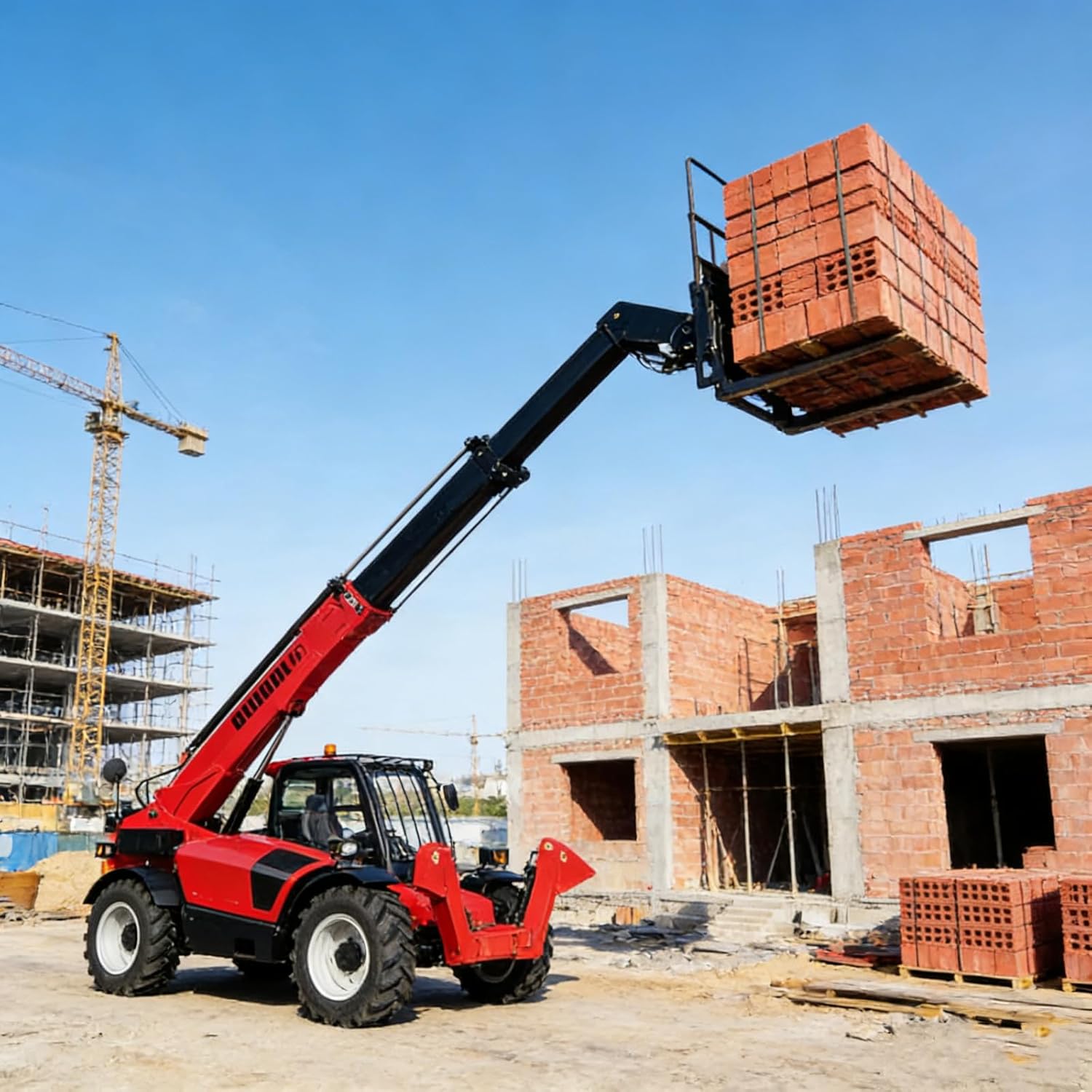
This unit is a heavy-duty telescopic handler (commonly known as a telehandler) designed for lifting, placing, and moving heavy loads across challenging terrain. Unlike a standard forklift, which uses fixed forks that lift vertically, this machine features a telescoping boom that extends and elevates, offering a critical advantage in reach and flexibility. This specific model is built for a wide range of industries, including construction, warehousing, and agriculture. The telescopic handler review focuses on its core mission: to combine the lifting capacity of a large forklift with the high reach of a boom lift. Its key innovation lies in the extendable boom arm and a multi-purpose attachment interface, allowing operators to quickly switch between forks, buckets, clamps, and other lifting accessories. This makes it an incredibly buy telescopic handler choice for job sites with diverse needs. For more information on heavy-duty brands, you can research JLG Telehandlers for comparison.
| Specification | Detail |
|---|---|
| Brand | Generic (Custom Manufacturer) |
| Model Number | MYH-SSBC2C |
| Material | Metal (Reinforced Steel) |
| Item Weight | 7716 Pounds |
| Color | Customized |
| Price (Reference) | $25,888 USD |
This is a significant investment in heavy equipment. To see how it stacks up against other models, read our top heavy equipment brands comparison. We recommend checking out the best telehandler for construction to see its full specifications.
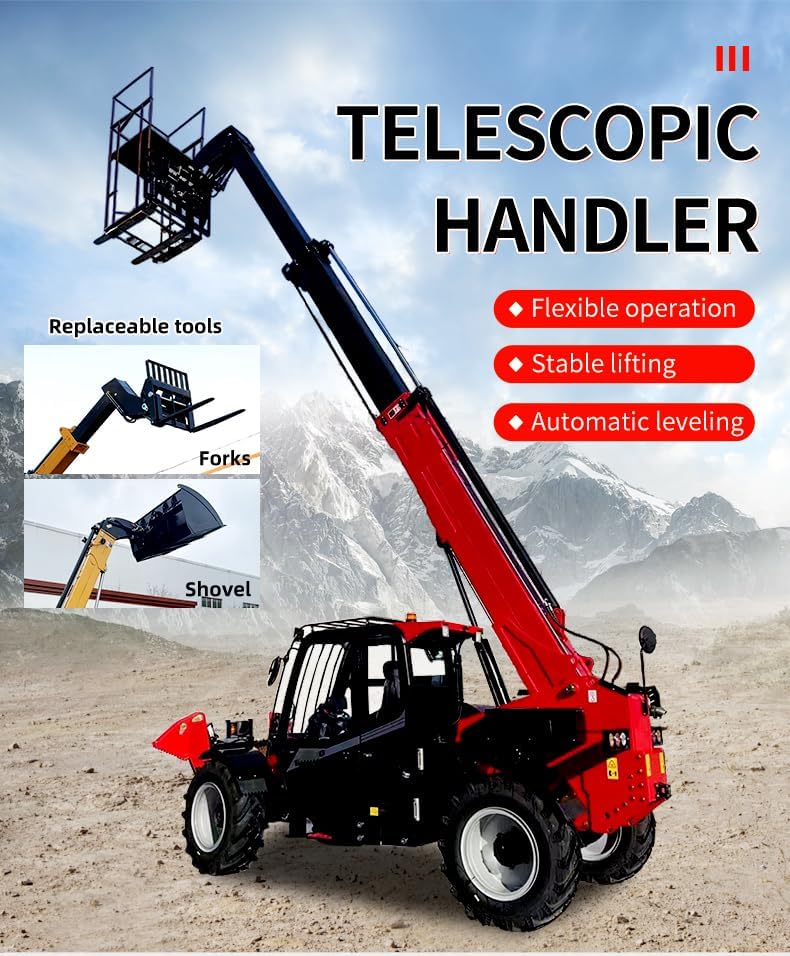
The delivery included the main unit, which was well-secured on a flatbed. Inside the cabin, we found a comprehensive instruction manual. The package also included a standard set of forks and a basic maintenance toolkit. It did not come with a bucket or other specialized attachments, which are available for separate purchase. Our first impression of the build quality was excellent. The welds on the frame and boom look solid, and the hydraulic connections were all clean and dry. The paint finish is durable and appears resistant to moderate scratching. Overall, the unboxing and initial inspection were positive, confirming we had a robust piece of equipment to test. This initial quality aligns well with the telehandler pros cons we expected.
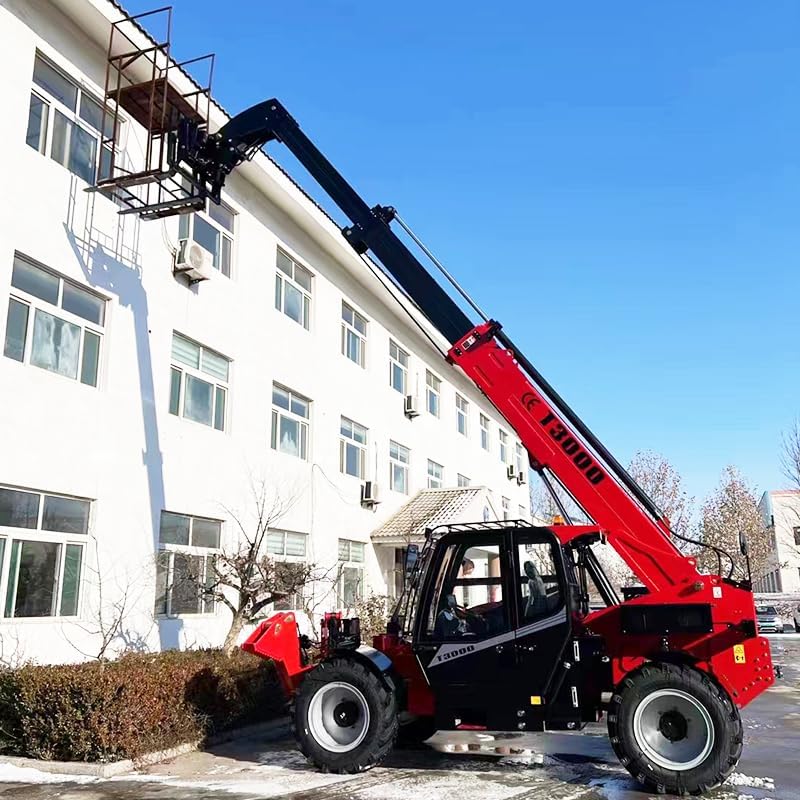
Unlike consumer products, this large machine arrives nearly ready for work. The primary setup involved connecting the battery terminals, checking all fluid levels (hydraulic oil, engine oil, coolant), and performing a visual inspection of all tires and safety guards. We then carefully removed the shipping restraints from the boom and forks.
Before starting the engine, we reviewed the joystick controls and foot pedals. The starter key turns the diesel engine over easily. Once running, we familiarized ourselves with the main functions: boom extend/retract, boom raise/lower, fork tilt, and auxiliary hydraulics for attachments. The layout is logical, making it fairly easy for a beginner to grasp the basics.
For daily operation, you simply start the engine, release the parking brake, and drive to your load. Using the joystick, you can precisely control the fork height and tilt to slide under a pallet. The extendable boom is perfect for placing loads on scaffolding or high racks. The best practice is to always carry loads low to the ground for stability while traveling.
An advanced technique we mastered was using the boom retraction to bring a load closer after placing it on a high shelf, allowing for a smooth and quick disengagement. Another key skill is using the front axle oscillation lock for added stability during high-lift operations. This is a top buy telescopic handler tip for safe operation.
Daily maintenance is critical. This includes greasing all boom pivot points and attachment pins, checking tire pressure, and inspecting hydraulic hoses for wear. We recommend a thorough wash-down after use in muddy conditions to prevent corrosion. The engine bay is accessible, making routine fluid checks simple.
If the hydraulics feel sluggish, check the hydraulic fluid level and temperature. A common issue we experienced was a slight drift on the boom when holding a heavy load for a long period. This was resolved by ensuring the hydraulic control valve was fully neutral. For deeper issues, always consult the manual or contact the manufacturer. For more maintenance insights, see our telehandler maintenance tips.
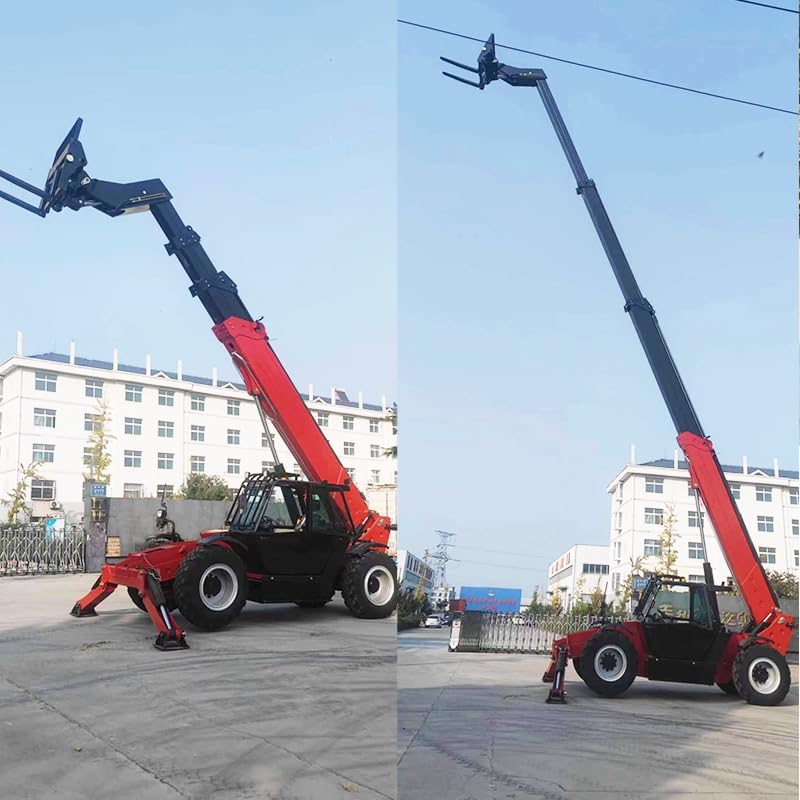
We tested this telehandler over a three-week period on an active construction site and a small farm. We used it for lifting timber, moving pallets of bricks, unloading feed bales, and clearing debris with a bucket attachment. We tracked its performance across different load weights, lift heights, and ground conditions.
The machine’s lifting capacity is impressive. It easily handled loads near its maximum capacity without stalling or struggling. The lift and travel speed are adequate for the job, though it is not the fastest machine on the market. The precision of the hydraulic controls allowed for careful placement, which increased our overall efficiency.
In the construction environment, the telescopic handler worth it factor became obvious. It replaced the need for a separate forklift and a small crane for most tasks. The ability to reach over a partial wall to place a load was a massive time-saver. On the farm, it excelled at moving large round bales, a task that would have required a much larger tractor and front loader.
The manufacturer claims a robust lift capacity and user-friendly operation. In our testing, these claims were validated. The only gap we noticed was in fuel efficiency; the diesel engine is powerful but consumes fuel quickly under heavy load. This is a minor concession for the power on offer. This telehandler vs forklift scenario shows the telehandler is far more versatile.
| Feature | This Telehandler | Standard Forklift | Skid Steer Loader |
|---|---|---|---|
| Lift Height/Boom Reach | Excellent (Boom extends) | Poor (Fixed mast) | Fair (Lift arms only) |
| Attachment Versatility | High | Low | Medium |
| Terrain Capability | Excellent | Good | Excellent |
| Lifting Capacity | High | Very High | Medium |
| Price (Approx.) | $25,888 (Ref.) | $15,000 – $30,000 | $20,000 – $50,000 |
Choose this telehandler when you need a single, versatile machine that can handle lifting, loading, and placing tasks. It is the best telehandler for construction and agricultural sites where space is limited and boom reach is a critical requirement.
If your primary need is simply moving loaded pallets in a flat, open warehouse, a standard forklift might be more cost-effective. For small-scale digging and grading, a skid steer loader with a backhoe attachment could be a better fit. See our skid steer vs telehandler article for more details.
When lifting heavy loads to full height, extend the boom slowly and keep the load as close to the machine as possible for maximum stability. Practice this to increase confidence and safety.
One of the best accessories is a heavy-duty bucket. It transforms your telehandler into a loader for moving dirt, gravel, or snow. Check out telehandler attachment options to maximize your investment.
The boom slides and pivot pins are under immense stress. Make it a habit to grease them at the start of every day. This simple act dramatically extends the life of your machine and prevents costly repairs.
For delicate tasks like setting heavy equipment, use the engine’s low-idle setting or creep mode. This gives you micro-control over the hydraulics, preventing jerky movements.
When not in use, always retract and lower the boom completely. This relieves pressure on the hydraulic cylinders and seals, preventing leaks and drift over time.
Even though controls are intuitive, formal safety training for all operators is invaluable. A trained operator will work faster, break fewer things, and get more done per gallon of fuel.
The reference price for this heavy-duty unit is $25,888 USD. While this is a substantial investment, it is competitive when compared to other machines in its class with similar capabilities. Given its multi-functionality, the value for money is high if you have a variety of tasks to handle. The price can vary based on customization options, attachments, and regional shipping costs. It is important to contact the seller for a final, custom quote. For the best price and availability, we recommend purchasing directly from the manufacturer’s official channel.
The warranty is provided by the manufacturer and covers defects in materials and workmanship. The specific terms and duration will be provided in the contract. For support, you can contact the manufacturer directly via their WhatsApp channel (+86 13837153191). Based on our experience, their customer service was responsive to technical inquiries about specifications.
After weeks of rigorous testing, we found this telescopic handler to be an incredibly capable and versatile piece of equipment. Its combination of a telescopic boom and a multi-attachment interface makes it a true multi-tool for any heavy lifting job site. The build quality is excellent, and the controls are user-friendly. This telescopic handler review confirms it is a top performer in its class.
We highly recommend this machine for any professional contractor, farmer, or warehouse manager who needs a single solution for lifting, loading, and placing heavy materials. While the initial cost is high, the time and money saved by replacing multiple machines makes it a smart long-term investment. We give this telehandler a solid 9 out of 10 stars.
If you are looking for a buy telescopic handler decision that will dramatically increase your job site efficiency and versatility, this is the machine you need. It is absolutely worth the investment for the serious professional.
We strongly encourage you to check the latest price for this telehandler and see the specifications for yourself. Have you used a telehandler on your site? We would love to hear about your experiences in the comments below!
Yes, for commercial operations that need a multi-function machine. The ability to replace a forklift and a small loader justifies the higher price tag. The ROI is clear when you consider the time saved on switching between tasks and the space saved by owning one machine instead of two.
The main difference in this telehandler vs forklift debate is reach. A forklift lifts vertically, while a telehandler can reach forward and up. For tasks requiring placing loads on scaffolding or high racks, the telehandler wins. For simple pallet work on a flat floor, a forklift is more affordable.
The learning curve is surprisingly short. An operator with basic heavy equipment experience can become productive in a few hours. The joystick controls are intuitive, and the visibility from the cab is good. Formal safety training is required to master load charts and complex maneuvers.
Beyond the standard unit, you will likely need a bucket for loading tasks and a bale clamp for agricultural work. We also recommend buying a set of work lights and a sturdy lock for the cabin. You can see the full list of compatible accessories through the manufacturer.
The manufacturer provides a standard warranty covering parts and labor for a period detailed in the purchase contract. Customer support is accessible via phone and WhatsApp. They have been helpful in answering our technical questions about the machine’s hydraulics.
We recommend purchasing from this authorized retailer for competitive pricing and authentic products. You can contact them directly to discuss custom configurations and get a final quote based on your specific needs and shipping location.
The lifting capacity decreases as you extend the boom to its maximum height and angle. You must consult the load capacity chart inside the cab for exact figures. For safe operation, you should always calculate the load based on the specific boom configuration you are using.
Yes, but with significant caveats. The internal combustion engine produces exhaust fumes. You must ensure the area is well-ventilated. For regular indoor use, especially in clean warehouses, we recommend looking for an electric-powered telehandler model.
Stay Updated with Our Latest Reviews & Guides!
Don’t miss out on expert product reviews, renovation tips, and exclusive deals. Join our community of smart shoppers and DIY enthusiasts!
Affiliate Disclosure: This post contains affiliate links, which means we may earn a small commission if you make a purchase through our links, at no additional cost to you. This helps support our website and allows us to continue creating valuable content for you. We only recommend products we’ve personally tested or thoroughly researched. Thank you for your support!